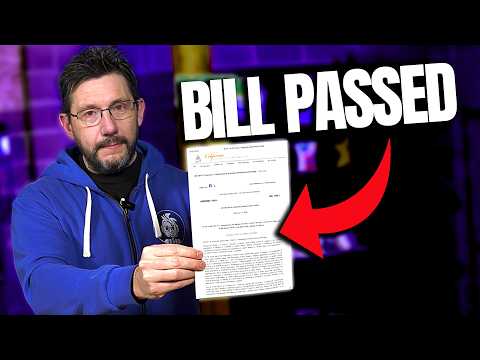
The bill has passed the Senate's Judiciary, Public Safety, and Appropriations Committees. Nothing stands between AB2047 and a vote of the entire California State Senate, where all 40 Senators decide whether it moves on to the Governor.
No date has been set, and that is exactly why now matters. Floor votes get scheduled with very little notice, so waiting for a date means missing the window. The one thing worth doing today is picking up the phone. Offices log every call by bill number and by position, and that tally reaches the Senator before the vote. A call takes two minutes and lands harder than an email, because a person has to stop and write it down.
Senators weigh calls from the people who can vote for them differently from everyone else's. If you live in California, start with the office that answers to you. It is one call, and it is the one that counts most.
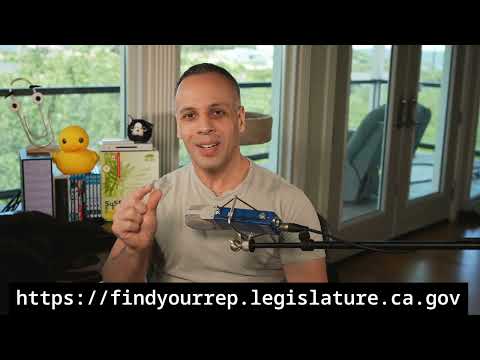
📍 Find your SenatorEnter your address and it returns your district and office. Then find that Senator in the list and dial.
You will reach a staffer, not the Senator. They are not there to argue with you - their job is to record your position. Short and polite beats long and heated every time.
"Hi, my name is [your name] and I'm a constituent in [your city]. I'm calling to ask the Senator to vote NO on AB 2047. [One sentence on why this matters to you.] Thank you for your time."
That is the whole call. If they ask for your ZIP code or address, give it - that is how the call gets counted. If you get voicemail, leave the same message; those are tallied too.
A floor vote means every one of these 40 offices casts a vote on AB2047 - not just the ones on a committee. Calling beyond your own district is the most direct pressure available to you right now.
These are the Capitol offices in Sacramento. On a phone, tap any number to dial it. You do not have to do all 40. Do five today, five tomorrow.
Scroll for the full list. Offices are staffed 9am to 5pm Pacific, Monday to Friday - calls placed during business hours reach a person. Outside those hours, leave a voicemail.
Outside the US? You are still welcome to call, and 3D printing is a global community - but a Californian's call carries the most weight here. The most useful thing you can do is send this page to someone who lives in the state.
Pick whichever one is true for you and say it in your own words. One real sentence from a real person carries further than a script read aloud.
AB2047 requires every 3D printer sold in California to run a DOJ state-certified "detection algorithm" - a technology that can not reliably exist. If passed, it would pull a tool used in thousands of schools, libraries, labs, and small businesses out from under our communities. This page is a plain-language guide you can share with your school board, PTA, or neighbor.
AB2047 rests on two foundations that cannot bear its weight: the legal foundation conflicts with established First Amendment law, and the technical foundation assumes capabilities that do not reliably exist.
CAD files and source code are protected expression; mandatory pre-review is a textbook prior restraint.
Forcing manufacturers to attest to contested algorithm output is compelled speech on a public concern.
Shapes shared between firearm parts and countless legitimate objects give no clear notice of prohibited conduct.
The bill sweeps in general-purpose hardware used overwhelmingly for lawful purposes.
A state-specific approved list for interstate hardware raises serious Dormant Commerce Clause issues.
Federal law already covers firearm manufacture, including via additive manufacturing.
Delegation, due process, Fourth Amendment telemetry, and state constitutional issues.
A rifled barrel is a grooved cylinder. So are industrial screws, optical mounts, and thousands of other parts.
Rotation, scaling, splitting a model into parts, or re-exporting defeats shape-based detection - without losing function.
By the time a printer sees G-code, shape context is gone. Reconstructing a "firearm" at print time is intractable.
Marlin, Klipper, and RepRap firmware can be flashed in minutes. Software-level "blocks" are simply removable.
There is no authoritative dataset of "firearm blueprints" - and the set grows adversarially.
Research on shape-based detection consistently shows error rates incompatible with general-purpose use.
Remote-print workflows, procedural generation, encrypted slicer output, multi-material composites, and more.
AB2047 cleared the Assembly's Public Safety, Judiciary, and Appropriations committees, survived the Suspense File, and passed the full Assembly floor with 33 amendments. In the State Senate it has now cleared the Judiciary Committee (June 23), the Public Safety Committee (June 30), and the Appropriations Committee. Every committee is behind it. What remains is a vote of the full Senate floor, where all 40 Senators decide - and no date has been set. Call your Senators →
AB2047 is introduced in the California State Assembly, framed as a public safety measure targeting 3D-printed firearms.
The bill cleared the Assembly Public Safety Committee and was advanced for further review.
The bill cleared the Assembly Judiciary Committee and was advanced to Appropriations.
The bill cleared the Assembly Appropriations Committee, was placed in the Suspense File, and has now been released with 33 amendments and sent to the floor.
The full Assembly voted to pass the amended bill, sending it across to the State Senate for the second half of the process.
The bill was heard by the Senate Judiciary Committee on June 23, cleared it, and advanced to the Senate Public Safety Committee.
The bill cleared the Senate Public Safety Committee on June 30 and now advances to the Senate Appropriations Committee.
After the summer recess the committee weighed what AB2047 would cost the state, and passed it. That was the last committee standing between the bill and a vote of the entire Senate.
All 40 State Senators vote on AB2047. No date has been set. Floor votes are scheduled with very little notice, so waiting for a date on the calendar means missing the window to be heard. Calling Senate offices now is the most useful thing anyone can do. Call your Senators →
If the Senate passes it, AB2047 goes to the Governor for a signature or a veto. The bill can be stopped at any stage.
Coverage of AB2047 and the maker community's response from across the tech press.

Hollywood's special-effects and prop shops, including Legacy Effects, line up against AB2047, warning that the same general-purpose 3D printers they depend on would be swept in - and that the bill's narrow exemption for printers "sold exclusively" to studios would not cover them.

"You're regulating a tool instead of the crime. The bigger concern is the precedent." David Tobin argues AB2047 misses the mark by mandating firearm-blocking tech in printers rather than enforcing existing law.

"California's AB2047 is one of the most troubling pieces of 3D printing legislation ever proposed." A profile of David Tobin's push to defeat the bill before the Assembly floor vote.

Experts warn that “safety algorithms” are a death sentence for makerspaces, schools, and innovation - with $10.5B in sunk costs and 1.5M California children using 3D printing today.
A growing series from the 3D Printing Nerd and the wider maker community: what AB2047 does, what it means for makers, schools, and businesses, and why its technical premise doesn't hold up.